



From the workshop's main distribution cabinets to the power interfaces of process equipment, the quality of secondary distribution directly determines whether a cleanroom facility can maintain continuous power supply during equipment move-in, production line expansion, and circuit modification. The “last mile” here refers to the final secondary distribution link from the main distribution cabinet to the process equipment. Recently, NATUS Electric undertook the Guangzhou Huaxing Optoelectronics secondary distribution project for Shanghai Jiwei Electronic System Engineering Co., Ltd., supplying EZ-POWER plug-in distribution panels, plug-in MCCBs and other equipment delivered to the Guangzhou project site.

Guangzhou Huaxing Semiconductor is the operating entity of TCL CSOT's t9 high-generation flat panel display (FPD) production line, focusing on the manufacture of high-end IT, automotive and professional display panels. This type of production line is a typical Class I load scenario: process equipment such as lithography, array and module tools has extremely high requirements for voltage stability, supply continuity and operational flexibility — even a brief power interruption can cause line stoppages and yield losses.
As the final link “from the distribution cabinet to the machine,” the essence of secondary distribution is not simply powering a single unit, but achieving uninterrupted capacity expansion and uninterrupted maintenance amid phased line construction, equipment relocation and load changes.

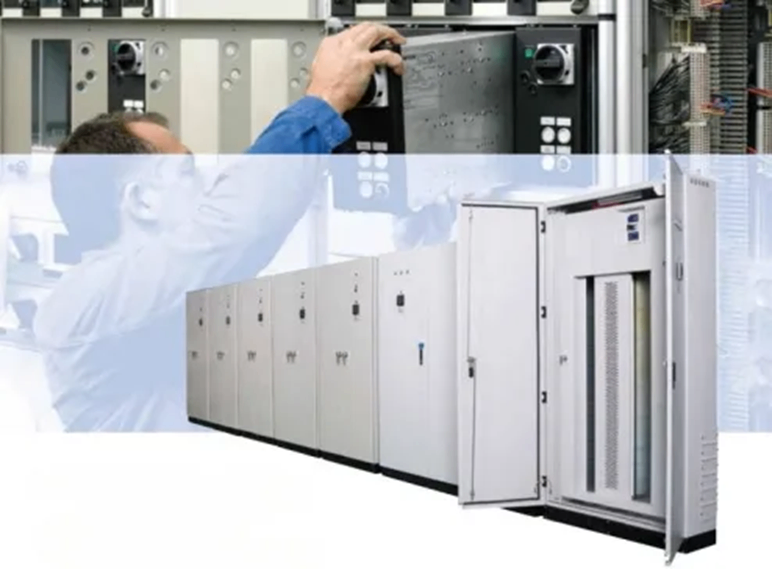
This project is centered on EZ-POWER plug-in power distribution panels, complemented by plug-in MCCBs in multiple specifications:
・ Multi-capacity distribution panels supplied in batches at 400 A / 630 A / 800 A / 1,000 A / 1,250 A;
・ Branch circuits covering 1P / 2P / 3P MCCBs, with currents from 16 A to 630 A;
・ Standard supply lead time of 35 days for the accessory list (delivered in batches according to site progress; calculated from confirmation of the technical drawings and scheme).
The products adopt an independent plug-in structure for each branch. Adding a circuit, replacing a circuit breaker or servicing a single circuit requires no power-off of the entire cabinet — the remaining circuits continue to operate normally. This is precisely the “zero-downtime maintenance” capability most valued by display panel and semiconductor fabs that run 24 hours a day.

Live plug-in capability
Where the cabinet design permits, MCCBs can be plugged and unplugged, allowing load adjustments without interrupting the main busbar;
Reserved redundancy
Plug-in positions are reserved in the design, so construction does not need to wait until loads are fully finalized, shortening the project schedule;
Circuit integrity
The busbar is integrally formed by epoxy casting and achieves circuit integrity at 750 °C for 3 hours, in compliance with IEC 60331 (subject to the type test report);
Protection against accidental contact
Conductive parts of the plug-in positions are insulated and shielded, with an IP21 protection rating;
Modularity
A standardized unit structure facilitates later circuit additions and on-site maintenance.
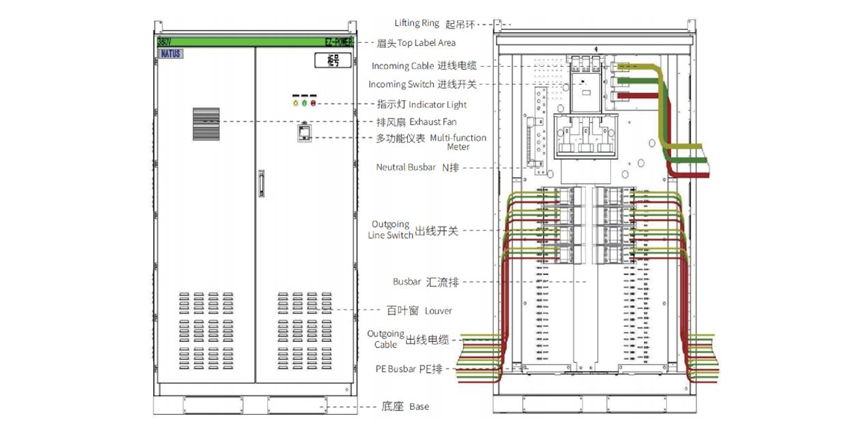
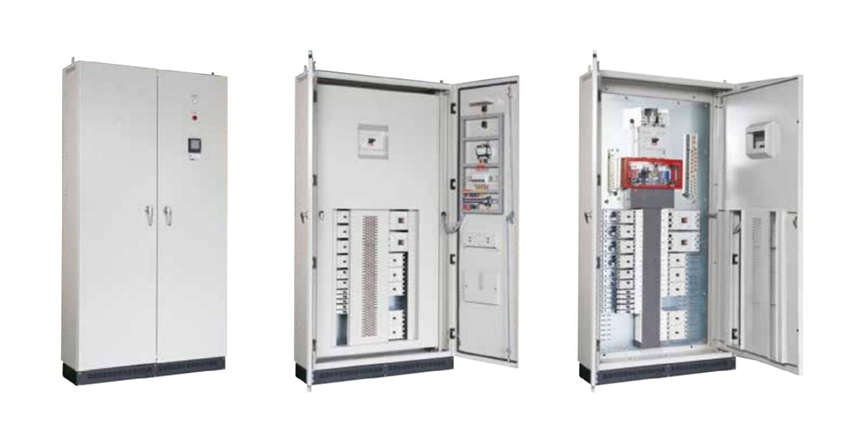
For secondary distribution engineering, this structure directly reduces cleanroom downtime losses and retrofit complexity.

In recent years, NATUS Electric has continued to deliver low-voltage switchgear assemblies and plug-in distribution solutions in the semiconductor, advanced display and new energy materials sectors, gradually building industrial capabilities encompassing “plug-in distribution panels + intelligent components + engineering delivery.”
This supply for the Guangzhou Huaxing Optoelectronics secondary distribution project is another implementation of NATUS in the facility power distribution chain of high-end display panel plants. Leveraging its Changzhou manufacturing base and accumulated low-voltage switchgear expertise, NATUS will continue to serve the upgrading of domestic precision manufacturing production lines with modular, highly reliable and easy-to-maintain integrated solutions.