


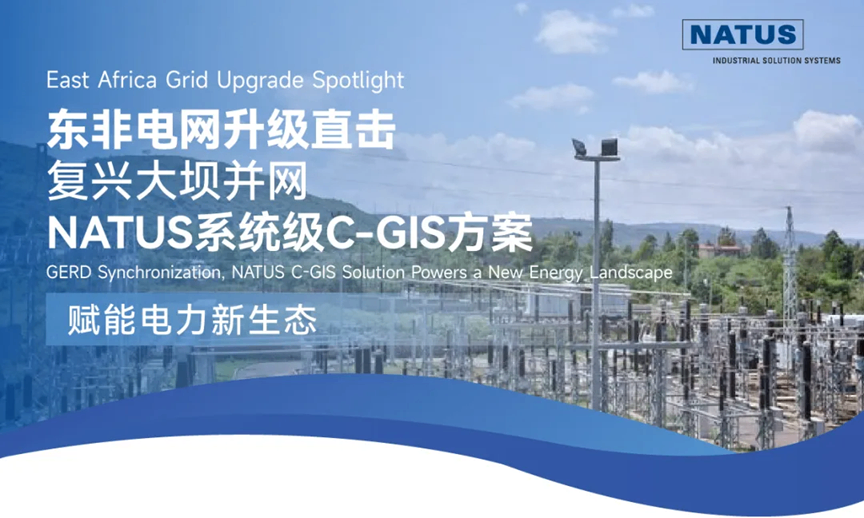
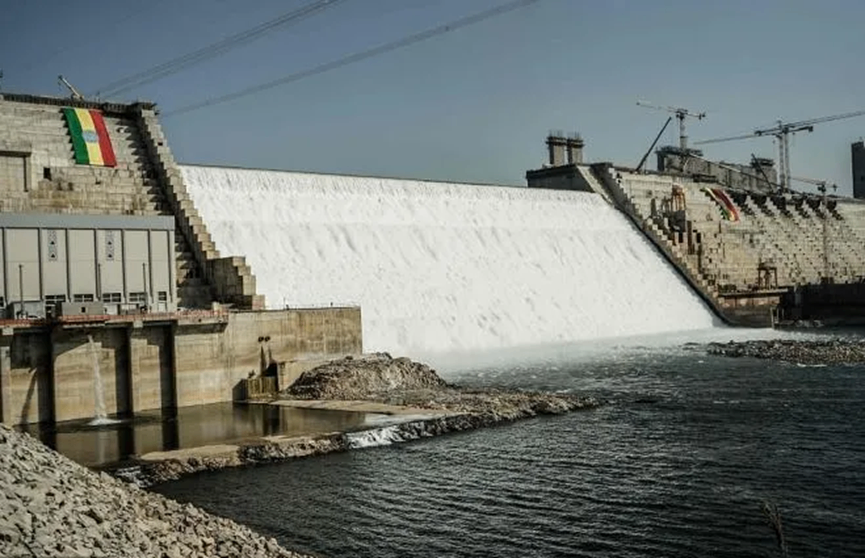
NATUS has recently taken a deep part in Ethiopia's national grid strengthening and expansion program. Centering on the complete-unit business of 10/35 kV C-GIS gas-insulated switchgear, the company is delivering system-level solutions for the stable transmission of power and regional interconnection following the grid connection of the Grand Ethiopian Renaissance Dam (GERD). As the GERD's generating units are progressively connected to the grid, Ethiopia's national generating capacity has grown by leaps and bounds. Yet this abundant hydropower must be transmitted efficiently to load centers and must support rapid industrial and urban development — a core challenge now facing Ethiopian Electric Power (EEP). With the dual support of World Bank financing and technology, EEP has officially launched its grid modernization program, and the building of an East African regional power hub has entered a critical phase. Drawing on its deep expertise in intelligent power distribution, NATUS is empowering East Africa's grid upgrade with complete-unit delivery and full-chain service capabilities.
Ethiopia is one of the countries in Africa richest in clean energy resources. The full commissioning of the GERD has propelled this nation in the Horn of Africa into a regional power exporter. But unlocking that generating capacity requires a robust transmission and distribution network as its underlying support. Backed by the World Bank, EEP is advancing grid modernization across the board: from the construction and expansion of urban GIS substations, to the upgrading of cross-regional transmission lines, and to the renovation of urban and rural medium-voltage distribution networks. This is not merely an infrastructure upgrade, but foundational support for the country's industrialization process. For the equipment suppliers taking part, it is no longer a simple equipment purchase, but a comprehensive test of technical adaptability, delivery certainty, and full life cycle service capability.
In EEP's project technical evaluation system, the traditional logic of “lowest price wins” is being replaced by “life cycle cost and technical quality given equal weight.” The customer's focus has shifted upward, from the electrical parameters of a single switchgear unit to the reliability, environmental adaptability, and intelligence of the entire substation. Ethiopia's complex highland climate — high temperatures, intense solar radiation, and dusty conditions — imposes stringent requirements on the sealing performance, corrosion resistance, and maintenance-free intervals of electrical equipment. What customers need is a complete solution that is “plug-and-play,” reduces on-site interfaces, and supports condition monitoring and predictive maintenance.
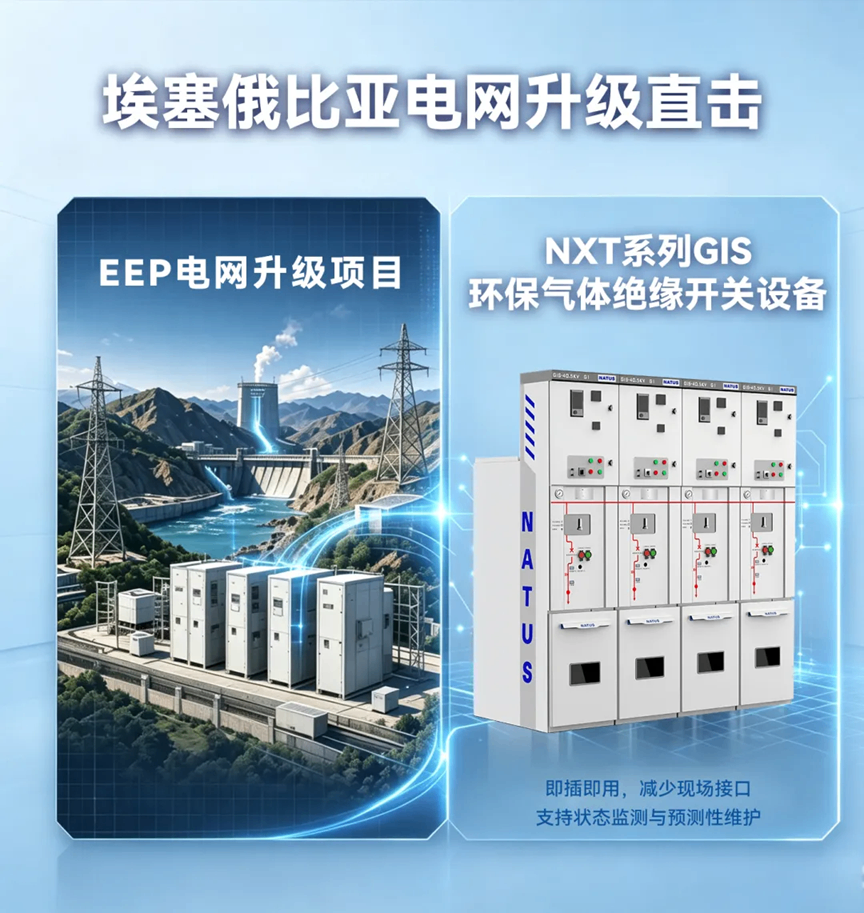
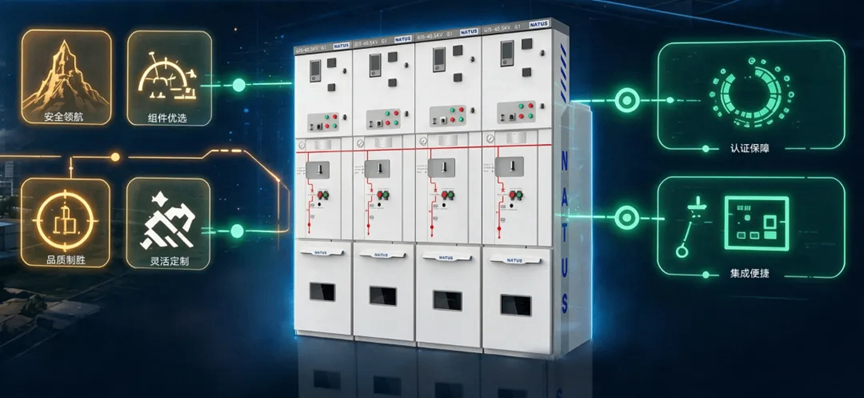
In response to these needs, NATUS has tailored a complete-unit 10/35 kV C-GIS solution for the EEP project. We fully enclose high-voltage components — circuit breakers, busbars, and disconnectors — within a stainless steel gas enclosure, which not only effectively isolates the equipment's operation from the external environment, but also, through its compact design, greatly saves valuable floor space in urban substations. From rigorous testing under the IEC 62271 standard to real-time monitoring of temperature, partial discharge, and gas density by intelligent sensors, NATUS deeply integrates the reliability of its “German DNA” with the efficiency of localized manufacturing, helping customers reduce full life cycle O&M costs while achieving digitalized and transparent grid operations.
This deep involvement in the upgrade of Ethiopia's national grid is an important milestone in NATUS's globalization strategy. What we provide is not just equipment, but full-chain capabilities covering customized technical solutions, production organization, delivery coordination, and localized services. From single products to system integration, and from product delivery to project-close local support, NATUS is steadily advancing from “exporting products” to “exporting capabilities.” Looking ahead, NATUS will continue to rely on the Group's R&D and manufacturing system and its complete electrical product portfolio, continuously strengthening its system integration and project delivery capabilities, and working together with customers and partners to contribute professional strength to the energy transition in East Africa and around the world.